Author Description
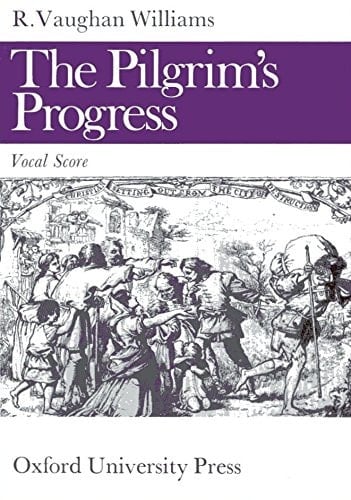
The Pilgrim's Progress is an English opera by Ralph Vaughan Williams, based on John Bunyan's allegory The Pilgrim's Progress. The composer himself described the work as a 'Morality' rather than an opera. Nonetheless, he intended the work to be performed on stage, rather than in a church or cathedral. Vaughan Williams himself prepared the libretto, with interpolations from the Bible and also text from his wife, Ursula. His changes to the story included altering the name of the central character from 'Christian' to 'Pilgrim', so as to universalize the spiritual message. The musical gestation of this opera was protracted, and was reflected in a number of musical projects in Vaughan Williams's life. For example, his earlier one-act opera The Shepherds of the Delectable Mountains from 1921 was incorporated into Act 4, Scene 2 of the later opera. His Symphony No. 5 also made use of themes originally conceived for his John Bunyan project. He wrote a 1940 motet on Mr. Valiant-for-Truth's speech for mixed chorus. The BBC commissioned Vaughan Williams for incidental music for a 1942 radio dramatization of The Pilgrim's Progress. Herbert Murrill has characterized the opera as "summarizing in three hours virtually the whole creative output of a great composer". The opera contains 41 individual singing roles. The first performance was at Covent Garden on 26 April 1951. The conductor was Leonard Hancock, whom Vaughan Williams had personally chosen to conduct the premiere, and the director Nevill Coghill.
Page Count:
236
Publication Date:
1952-01-01
ISBN-10:
0193392275
ISBN-13:
9780193392274