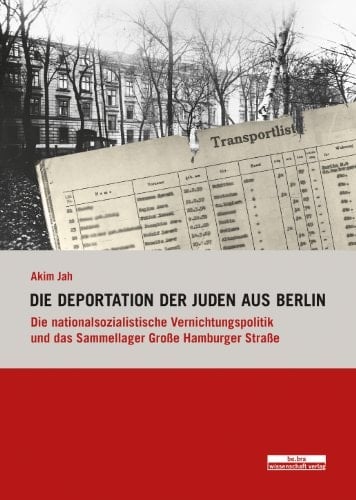
Die Deportation der Juden aus Berlin die nationalsozialistische Vernichtungspolitik und das Sammellager Grosse Hamburger Strasse
0
0
Author Description
Of the 50,00 Jews deported from Berlin between 1941-45, 22,000 were interned in Große Hamburger Straße, a Jewish old-age home. It was turned into a camp in June 1942, in preparation for the deportation of Jews over the age of 65 to Theresienstadt. Between October 1941-October 1942, the synagogue in Levetzowstraße served as the main internment camp for deportation to Auschwitz. However, after 140 of the Große Hamburger Straße's 190 inhabitants were deported, it became a permanent camp, with Levetzowstraße serving as a temporary camp. Then, Große Hamburger Straße was remodelled in fall 1942 and became the main camp for deportation to Auschwitz. Deportations to Theresienstadt went through another Jewish home for the elderly. During the second half of 1942, Alois Brunner dismantled all the Jewish charitable institutions in Berlin and deported the inmates. After his departure in 1943, Walter Dobberke assumed control over Große Hamburger Straße. Ca. 8,000 Jews were interned there from November 1942 to February 1943, the time of the "Fabrikaktion". Between April 1943-February 1944, Große Hamburger Straße was the only internment camp for Berlin's Jews; transports were organized from there to both Auschwitz and Theresienstadt. The last large deportations were in 1943. In the fall of 1943 some foreign Jews were interned there, as were Jews from dissolved mixed marriages in 1944. The last transport from the camp took place in February 1944. Compares Große Hamburger Straße to other internment camps and discusses the organization of the deportations.
Page Count:
756
Publication Date:
2013-01-01
ISBN-10:
3954100150
ISBN-13:
9783954100156