Author Description
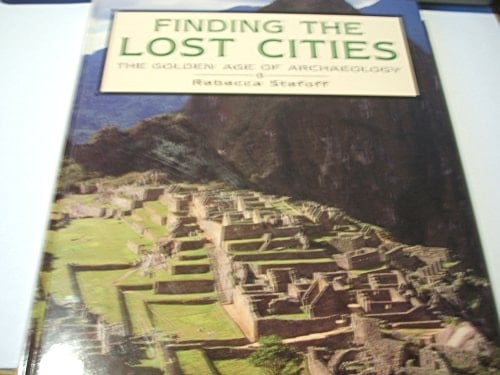
Product DescriptionThe idea of "lost cities" appeals to our love of mystery and our thirst for knowledge. The discovery itself--whether the result of a long and patient search, or a sudden and surprising accident--is a first-class adventure. But discovery is only the beginning of the story: the site must then beinvestigated and studied before it yields up its secrets. A lost city may hold many clues to ancient religious beliefs, the origins and decline of cities, or patterns of trade and warfare among our ancestors.Finding the Lost Cities leads the eader through the sites of 12 buried and rediscovered cities. Each chapter focuses on one legendary city: What do we know about it? How was it lost? Who searched for it and failed? Who finally succeeded in finding and reopening it to the rest of the world? What hasthe newly refound city told us about the past? Cities covered include: Troy, the fabled city of Homer's epics, thought by many to be no more than a myth until German-born Heinrich Schliemann, using theIliad and theOdyssey as his guide, unearthed the city's stone walls and hauled off a fortune in gold and silver. Great Zimbabwe, the remnants of an ancient African civilization uncovered in 1871 by German explorer Karl Mauch. Angkor, the ruins of an ancient civilization buried in the dense jungle of Cambodia and rediscovered by French-born naturalist Henri Mouhot in 1860. Gournia, a Minoan settlement on the island of Crete and the first lost city to be discovered by a woman--Harriet Boyd, a graduate of Smith College. Machu Picchu, the mountaintop citadel of the Incas, discovered in 1911 in Peru by a real-life Indiana Jones, Hiram Bingham, professor of Latin American history at Yale and a future U.S. senator. Ubar, a city buried by the sands of the Arabian peninsula more than a thousand years ago and unearthed in 1991 by a team of scientists using the most advanced satellite technology available. Other cities featured are Petra, Nineveh, Hattusha, Copán, Chaco Canyon, Knossos, and Ur. Each chapter is lavishly illustrated with photographs of dig sites and discovered treasures--many in full color--as well as detailed, newly commissioned maps pinpointing the location of the site. A chronology, suggestions for further reading, and a detailed index round out this unique book. Thereis no resource for the study of geography and the customs of ancient civilizations that is richer or more satisfying.Finding the Lost Cities is a wonderful way to stimulate a young archaeologist's imagination and curiosity.From BooklistGr. 7^-12. Stefoff chronicles the discoveries of ancient cities, from the Americas to Africa to the Middle East, that were either lost or unexplored in modern times. In addition to capsulizing the history of these places, she paints a vivid picture of archaeology as it has progressed from little more than looting and grave robbing to the painstaking process it is today. The book journeys to some familiar places--among them, Troy, Crete, and the Anasazi cities in New Mexico--but it also examines some lesser-known civilizations, such as Cambodia's Ankgor and Gournia, the first lost city uncovered by a woman. The chronicle of discovery ends on a high technological note with Steffof describing how NASA's Space Imaging Radar verified the location of a legendary city buried beneath the sands of Oman. More than 100 photos are included, as are a chronology and an extensive reading list.Randy MeyerFrom Kirkus ReviewsStefoff (Charles Darwin, 1996, etc.) blows the dust off 13 of archaeology's greatest triumphs, and the careers of the scientists and adventurers who forged them during the field's ``heroic age'' (from Napoleon's 1798 Egyptian expedition to Howard Carter's first glimpse of Tutankhamen's treasure in 1922) and beyond. To the often-told tales of Schliemann at Troy, Evans at Knossos, and Layard at Nineveh, Stefoff adds plenty of lesser-known discoveries, including Harriet Boyd's excavations at
Page Count:
191
Publication Date:
2099-11-30
ISBN-10:
0195092481
ISBN-13:
9780195092486
EXTINCT CITIES
Archaeology
Cities And Towns
Community Tags
Reader Comments
Share Your Thoughts
No comments yet. Be the first to share your thoughts!