Author Description
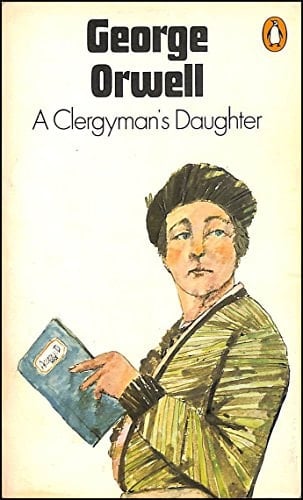
Dorothy Hare, the clergyman's daughter of this title, grows up subservient to her tyrannical father. But submission has its limit and Dorothy rebels, or at least her psyche does. She blacks out and reappears as a vagrant amnesiac whose adventures show us life, such as it is, from the underside.
Menrva's Summary
THE PULSE
Dorothy Hare, a repressed clergyman's daughter, experiences a sudden psychological break that thrusts her from a life of rigid domestic servitude into the harsh reality of the British underclass. Dorothy attempts to navigate the brutal physical and social constraints of poverty after losing her memory, facing hunger, homelessness, and the exploitation of the labor market. The narrative follows her struggle to reconcile her former identity with her new, precarious existence, utilizing a third-person perspective that shifts between her internal turmoil and the external squalor of her environment. The story examines the logical consequences of social displacement and the fragility of individual agency when stripped of class status.
INSIDE THE PAGES
- Exploration of the British class system and social stratification
- Depiction of the harsh realities of agricultural labor and hop-picking
- Use of experimental narrative techniques, including a play-script segment
- Critique of religious hypocrisy and institutional authority
- Focus on the psychological impact of sudden trauma and amnesia
- Detailed observation of urban and rural poverty in the early 20th century
- Examination of the limitations placed on women in traditional domestic roles
- Contrast between the mundane life of a rectory and the chaos of the streets
THE COLLECTIVE ECHO
Discussion often centers on the novel's departure from Orwell's later, more polished political allegories. Readers frequently highlight the stark, unvarnished depiction of poverty as a defining feature of the text. Critics often debate the effectiveness of the experimental stylistic shifts, particularly the inclusion of a play-script format within the prose. Many observers note that while the book is less frequently cited than his major works, it remains a vital study of the author's evolving social consciousness and his interest in the lives of the marginalized.
Page Count:
272
Publication Date:
1964-01-07
ISBN-10:
0140018778
ISBN-13:
9780140018776
Satire
classic
Contemporary
British literature
Social Realism