Loading...
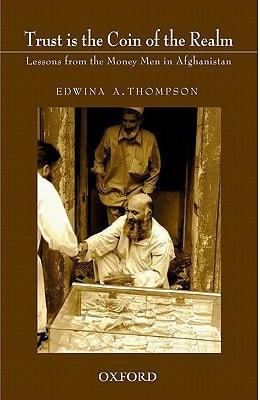
Product DescriptionTrust is the Coin of the Realm shines a rare light into the labyrinth of Afghanistan's 'money men' and their influential informal economy that links the Islamic world. Hawala is the ancient financial system that predates Muhammad, and provides a vital key to engaging with many of the world'straditional cultures. Stereotyped as 'built for terrorism' and a dangerous pipeline for dirty money in the wake of 9/11, Thompson reveals it to be indispensable to the work and reach of humanitarians, donors, family members, and the business community. Outsiders striving to build states and peace incrisis countries will find this book invaluable for earning the trust that is essential if their efforts are to make a lasting difference.Review"Thompson offers an analysis which boasts a rare combination of theoretical and policy relevance. While scholars will find much to learn from her approach to the interplay of institutions, networks, and practices, her empirical analysis of the interplay of development trends, state failure, Islamic financial networks, and money laundering challenges a number of assumptions that have both shaped approaches to the War on Terror and perhaps even undermined its effectiveness."--Dr. Wesley W. Widmaier, Senior Research Fellow, Griffith Asia Institute, Griffith University"The highly topical nature of the research and subject matter clearly came at a heavy personal price given that a white, Western foreigner was conducting interviews at the height of the War on Terror on Afghanistan within Afghanistan...such interviews entailed a high degree of trust between her and the interviewee, which would have been a vital pre-requisite even in the absence of the War on Terror. Fortunatel"A fascinating foray down the alleys of the 'hawala' world, this book is as rich in its insights as it was daring in its research. There are lessons here for both policy makers and scholars, for the concerned citizen as well as the international expert. If we insist on behaving as 'ugly Westerners', Thompson leaves us without excuse."-- Os Guinness, Senior Fellow, EastWest Institute"Thompson's masterful approach has tapped into a crucial intellectual and very human component that we must draw upon in order to understand the nexus of terrorism, religion, the worlds of licit and illicit finance, corruption, government legitimacy, and insurgency. She has woven these strands together brilliantly in a manner that should inform the design and implementation of coherent peace-making and state-building strategies, not just in Afghanistan, but all around the world. A must read for policy makers, practitioners, and informed publics."--Colonel Daniel S. Roper, U.S. Army (Retired), and former Director of U.S. Army Counterinsurgency Center, Fort Leavenworth, 2007-2011"Thompson offers an analysis which boasts a rare combination of theoretical and policy relevance. While scholars will find much to learn from her approach to the interplay of institutions, networks, and practices, her empirical analysis of the interplay of development trends, state failure, Islamic financial networks, and money laundering challenges a number of assumptions that have both shaped approaches to the War on Terror and perhaps even undermined its effectiveness."--Wesley W. Widmaier, Senior Research Fellow, Griffith Asia Institute, Griffith University"The highly topical nature of the research and subject matter clearly came at a heavy personal price given that a white, Western foreigner was conducting interviews at the height of the War on Terror on Afghanistan within Afghanistan...such interviews entailed a high degree of trust between her and the interviewee, which would have beeAbout the AuthorEdwina A. Thompson draws from a diverse career working with humanitarian organizations, governments, and the military in complex environments--from Somalia, Sudan and Sri Lanka to Papua New Guinea, Pakistan, and of course Afghanistan. Her academic
Page Count:
354
Publication Date:
2011-04-15
AFGHANISTAN_POLITICS AND GOVERNMENT
PAKISTAN_POLITICS AND GOVERNMENT
LEGITIMACY OF GOVERNMENTS
Community Tags
Similar Books


