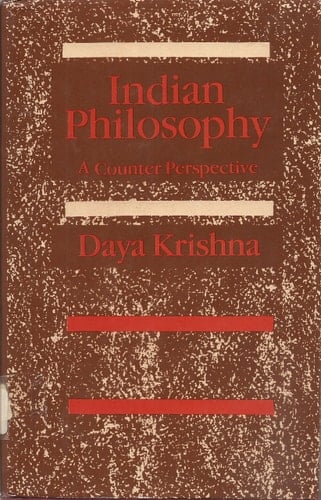
Author Description
Most writings on Indian philosophy assume that its central concern is withmoska, that the Vedas along with theUpanishadic texts are at its root and that it consists of six orthodox systems knowns asMimamasa,Vedanta,Nyaya,Vaisesika,Samkhya, andYoga, on the one hand and three unorthodoxsystems: Buddhism, Jainism andCarvaka, on the other. Besides these, they accept generally the theory ofKarma and the theory ofPurusartha as parts of what the Indian tradition thinks about human action. The essays in this volume question these assumptions and show that there is little ground foraccepting them. A new counter-perspective is presented for the articulation of the Indian philosophical tradition that breaks from the traditional frame in which it has usually been presented.
Page Count:
230
Publication Date:
1992-07-23
ISBN-10:
0195626419
ISBN-13:
9780195626414
Community Tags
Reader Comments
Share Your Thoughts
No comments yet. Be the first to share your thoughts!