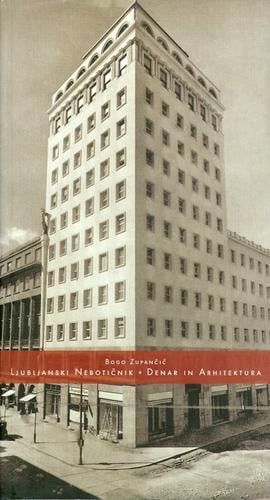
Ljubljanski Nebotičnik - denar in arhitektura: Nebotičnik : the skyscraper of Ljubljana : money and architecture
0
0
Author Description
N e b o t i č n i k - T h e S k y s c r a p e r o f L j u b l j a n a • M o n e y a n d A r c h i t e c t u r e The story about the first skyscraper in Ljubljana, narrated through the media of money and connected stories, marks the 70th anniversary of the first Americanism in Ljubljana, the laying of the foundation stone on April 18, 1931. The main actors are the skyscraper (“Nebotičnik”), the investor, the architects Vladimir Šubic and Jože Plečnik, but also the builders, sculptors, Freemasons, etc. Most of the story runs between both world wars, followed by events from the post-war socialist period into the present. The story brings to light the structure of the society of the time; it speaks about the power of the slim bourgeoisie, the dreams and successes or the despair of the people. The aim of the discourse is to revitalise the formerly known, but systematically ignored and denied quality of architecture, that space is a commodity and architecture a business. We are seldom aware that architecture is a commodity and a business. As consumers of space we often relinquish our powers to “invisible forces” and non-transparent processes, led by absolute and real interests. Buildings and spaces are the subjects of spatial vision and business strategy that change through time, because of the development of technology, social and economic factors, new architectural theory, demands by investors, desires of users etc. Any production of space follows its own aesthetics. The discourse, however, mainly deals with utility, tied to economic and financial factors, with a dash of aesthetics. The “Nebotičnik” (the corner tower) in Ljubljana and connected stories from the '30s are the motif for this presentation of capitalist processes in Slovenia, their sorry continuation, and some initiatives for a happier future. It is a story about capitalist production of space that happened in the late '20s and early '30s of the 20th century. The post-war socialist era that was based on completely different values couldn't provide comparable economic data. Thus, this story is a passage through changing value systems, from pre-war national capitalism, post-war socialism to the present capitalism tied to processes of transition, globalisation, and the new economy. Dedicated to Marija Schöff (1905-1928).
Page Count:
180
Publication Date:
2001-01-01
ISBN-10:
9616390074