Author Description
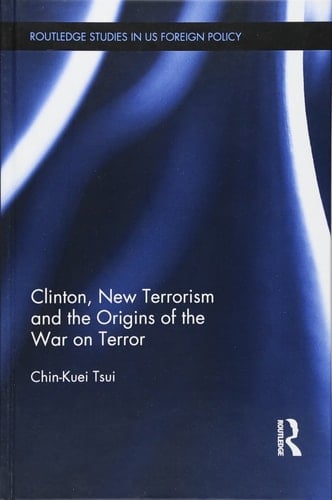
Following the tragedy of September 11, 2001, there has been considerable research on U.S. post-9/11 foreign and security policies. Within this literature, a frequent assumption is that the war and its accompanying discourse originated largely with the George W. Bush Administration and that there was something of a counterterrorism policy revolution in the U.S. political arena after the 2001 terrorist attacks. Missing from these accounts is a systematic, in-depth analysis of the impact of the Clinton administration s counterterrorism discourse and policies. This book focuses on President Clinton s discursive construction of new terrorism, or catastrophic terrorism, and the counterterrorism practices implemented by the Clinton Administration, while simultaneously comparing it with President Reagan s and President George W. Bush s approaches to counterterrorism. The book illustrates that the American-led war on terror and its discourse can actually be traced to earlier periods and that the so-called Bush revolution was largely built upon the existing framework established by President Reagan and President Clinton. Over several decades, U.S. administrations tended to adopt similar rhetorical strategies to interpret terrorism and terrorists and employed a military-originated approach to counterterrorism. Through the way that discourse was created, circulated and understood, the war on terror promoted by U.S. elites was sedimented in the wider American society and functioned as a truth regime that excluded other counter-discourses and affected the way that terrorism and terrorists were dealt with. In effect, the book aims to uncover the myth of President George W. Bush s foreign policy revolution and contribute to a deeper historical understanding of the U.S.-led war on terror by providing a thorough analysis of President Clinton s counterterrorism initiatives. "
Page Count:
177
Publication Date:
2017-01-01
ISBN-10:
1138841722
ISBN-13:
9781138841727