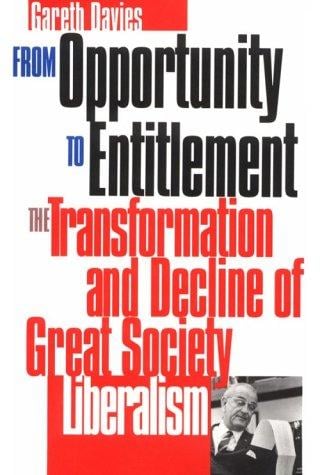
From Opportunity to Entitlement: The Transformation and Decline of Great Society Liberalism
0
0
Author Description
Between 1964 and 1972, American liberals radically transformed their welfare philosophy from one founded on opportunity and hard work to one advocating automatic entitlements. Gareth Davies' book shows us just how far-reaching that transformation was and how much it has to teach anyone engaged in the latest round of debates over welfare reform in America. When Lyndon Johnson declared a "War on Poverty," he took great care to align his ambitious program with national attitudes toward work, worthiness, and dependency. Eight years later, however, American liberals were dominated by those who believed that all citizens enjoyed an unqualified right to income support with no strings or obligations attached. That shift, Davies argues, was part of a broader transformation in political values that had devastating consequences for the Democratic Party in particular and for the cause of liberalism generally. Davies also explains in rich detail how the dominant strain of American liberalism came to abandon individualism, one of the nation's dogmas, thus shattering the New Deal liberal hegemony with consequences still affecting American politics in the mid-1990s. Placing today's welfare debates within this historical context, Davies shows that the current emphasis on work and personal responsibility is neither a liberal innovation nor distinctively conservative.
Page Count:
336
Publication Date:
1999-09-01
ISBN-10:
0700609946
ISBN-13:
9780700609949