Author Description
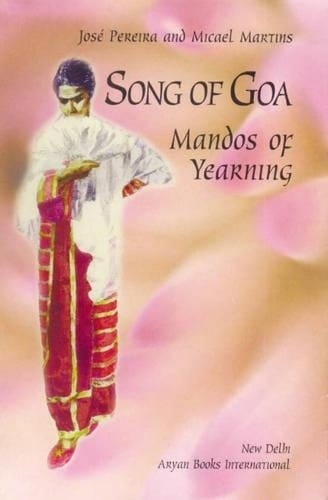
Konkani song, of which Goan song is a preeminent branch, is a treasury of the traditional music of the Indian subcontinent, containing as many as 34 identifiable types of song. They include the monophonic and harmonic varieties, the former in existence before the Portuguese brought western music into India, and the latter, consequent on the western impact. It was in Goa that Indian musicians first began to compose in western musical forms, incorporating into them motifs and nuances of their own immemorial tradition. Among the 34 types figures the Mando, a dance song typically consisting of quatrains, frequently having appended choruses, set in six-four time. Its main themes are love and events (fobro), the latter social and political in nature. But its favorite theme is love, oriented toward marriage, where the lover yearns for union with his beloved, achieves that union, or laments at his failure to realize it. The love Mandos are thus of three types: yearning (utrike, the theme of this book), union (ekvott) and lamentation (villap). The melody of the Mando is uniformly melancholic, but it scintillates with luminous imagery, as of suns, stars, flowers and diamonds. The Mando evidently originated in the 1830s, but its period of high achievement extends from around 1870 to 1950. It was given expression.
Page Count:
184
Publication Date:
2000-06-02
ISBN-10:
8173051666
ISBN-13:
9788173051661