Author Description
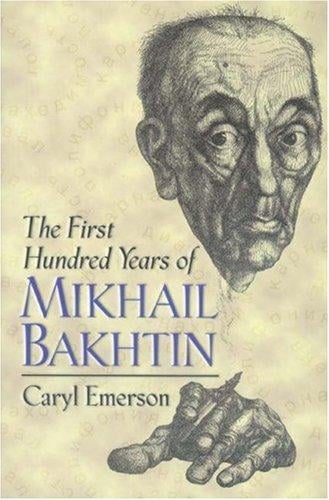
In this candid assessment of his place in Russian and Western thought, Caryl Emerson brings to light what might be unfamiliar to the non-Russian reader: Bakhtin's foundational ideas, forged in the early revolutionary years, yet hardly altered during his lifetime. With the collapse of the Soviet system, a truer sense of Bakhtin's contribution may now be judged in the context of its origins and its contemporary Russian "reclamation.". A foremost Bakhtin authority, Caryl Emerson mines extensive Russian sources to explore Bakhtin's reception in Russia, from his earliest publication in 1929 until his death, and his posthumous rediscovery. After a reception-history of Bakhtin's published work, she examines the role of his ideas in the post-Stalinist revival of the Russian literary profession, concentrating on the most provocative rethinkings of three major concepts in his world: dialogue and polyphony; carnival; and "outsideness," a position Bakhtin considered essential to both ethics and aesthetics. Finally, she speculates on the future of Bakhtin's method, which was much more than a tool of criticism: it will "tell you how to teach, write, live, talk, think."
Page Count:
293
Publication Date:
1997-01-01
ISBN-10:
069106976X
Community Tags
Reader Comments
Share Your Thoughts
No comments yet. Be the first to share your thoughts!