Author Description
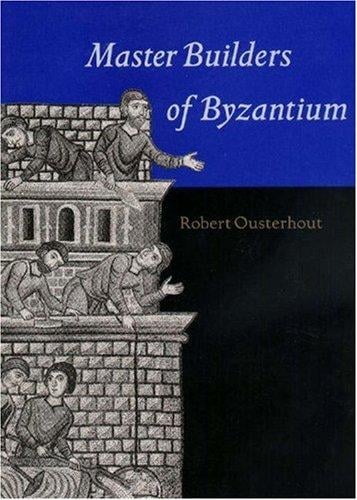
"In the first major study to examine Byzantine architecture from the perspective of its builders, Robert Ousterhout identifies the problems Byzantine masons commonly encountered in the process of design and construction. From a careful analysis of the written evidence, the archaeological record, and - most importantly - the surviving buildings, he concludes that Byzantine architecture was far more innovative than has previously been acknowledged.". "Following preliminary observations on Byzantine church architecture and its defining characteristics, Ousterhout examines the textual sources, yielding a new understanding of the identities and the respective roles of patrons, bureaucrats, and masons in the building process. Narrowing his focus to the masons, or master builders, he clarifies both their theoretical and their very practical concerns in architectural design, suggesting that the master builders relied on geometry and memory, rather than blueprints, to guide their work. The study focuses on churches built in the area of Constantinople between the ninth and fifteenth centuries, but it also refers back to earlier works such as Hagia Sophia, and it tracks Byzantine masons as far afield as Russia, the Balkans, and Jerusalem. With more than two hundred carefully chosen illustrations - many published here for the first time - this is a must read for anyone interested in Byzantine architecture and monumental art."--BOOK JACKET.
Page Count:
320
Publication Date:
1999-12-28
ISBN-10:
0691005354
ISBN-13:
9780691005355