Author Description
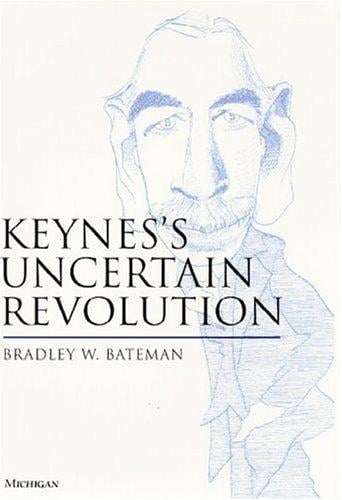
This book tells the story of John Maynard Keynes's concern with probability and uncertainty. Economists have long been interested in the possible connection between the ideas in the 1921 Treatise of Probability and the 1936 General Theory of Money, Interest and Employment. Here Bradley Bateman makes a unique contribution by examining the provenance of Keynes's ideas. Via a careful exploration of the full historical context of Keynes's work, looking both at the background of his early philosophical work and at his extensive policy-making during the interwar period, Bateman concludes that no easy connection between Probability and The General Theory can be made. Indeed, during much of the time that he was writing The General Theory, Keynes was arguing strongly in his policy-making against the importance of uncertainty in economic theory. It is only in his understanding of contemporary financial markets and his arguments over appropriate policies to control them that the full story of his interest in probability and uncertainty can be found. Keynes's Uncertain Revolution will be of interest to political historians and scientists, philosophers, historians of science, and economists. Bateman shows the rich diversity of influences on Keynes's thought and argues for the importance of seeing the development of economic doctrine in historical context.
Page Count:
183
Publication Date:
1996-01-01
ISBN-10:
0472107089