Author Description
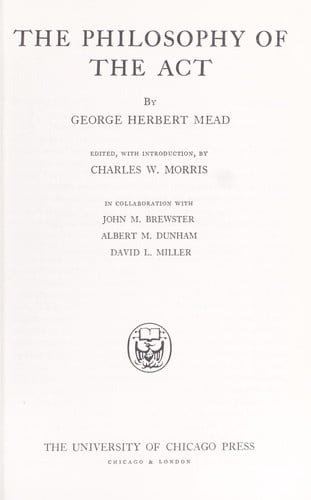
George Herbert Mead's "Philosophy of the Act" explores the social nature of mind and self, arguing that human behavior and consciousness emerge from social interaction and communication, particularly through language, play, and games. Here's a more detailed overview: Social Emergence of Mind and Self: Mead believed that the mind and the self are not innate but arise from the social process of communication and interaction. The Act as a Unit of Analysis: Mead analyzed the act as a fundamental unit of behavior, breaking it down into stages like impulse, perception, manipulation, and consummation. The Role of Language and Symbols: Mead emphasized the importance of language and symbolic interaction in the development of the mind and self, arguing that humans learn to think and act through shared meanings and symbols. The "I" and the "Me": Mead introduced the concepts of the "I" (the active, spontaneous self) and the "me" (the social self, reflecting the attitudes of others) as key components of the self. Role-Taking and the Generalized Other: Mead argued that individuals develop a sense of self by taking on the roles of others and internalizing the perspectives of the "generalized other" (society as a whole). The Importance of Social Interaction: Mead's work highlights the importance of social interaction and communication in shaping human behavior, thought, and consciousness.
Page Count:
696
Publication Date:
1972-01-01
ISBN-10:
0226516660