Author Description
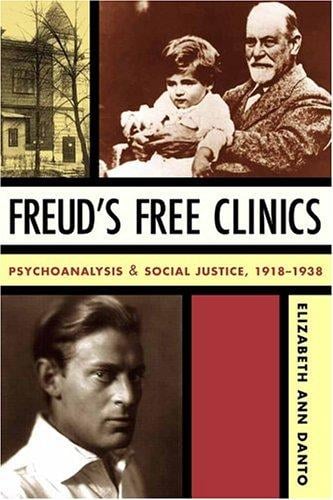
"Today many view Sigmund Freud as an elitist whose psychoanalytic treatment was reserved for the intellectually and financially advantaged. However, in this new work Elizabeth Ann Danto presents a strikingly different picture of Freud and the early psychoanalytic movement. Danto recovers the neglected history of Freud and other analysts' intense social activism and their commitment to treating the poor and working classes." "Drawing on oral histories and new archival material, Danto offers portraits of the movement's central figures and their beliefs. She explores the successes, failures, and challenges faced by free institutes such as the Berlin Poliklinik, the Vienna Ambulatorium, and Alfred Adler's child-guidance clinics. She also describes the efforts of Wilhelm Reich's Sex-Pol, a fusion of psychoanalysis and left-wing politics, which provided free counseling and sex education and aimed to end public repression of private sexuality." "In addition to situating the efforts of psychoanalysts in the political and cultural contexts of Weimar Germany and Red Vienna, Danto also discusses the important treatments and methods developed during this period, including child analysis, short-term therapy, crisis intervention, task-centered treatment, active therapy and clinical case presentations. Her work illuminates the importance of the social environment and the idea of community to the theory and practice of psychoanalysis."--Jacket.
Page Count:
352
Publication Date:
2005-05-30
ISBN-10:
0231131801
ISBN-13:
9780231131803