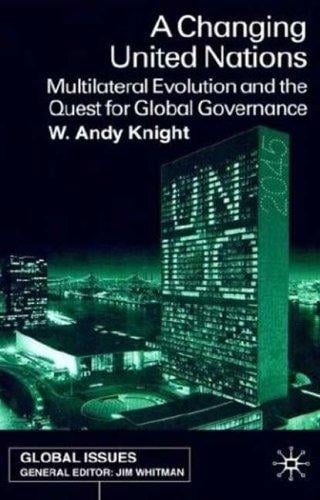
A Changing United Nations: Multilateral Evolution and the Quest for Global Governance (Global Issues (Thomson Learning).)
0
0
Author Description
"The United Nations is at a critical juncture. It is faced with two distinct choices: to remain a 'decision frozen in time' or to develop a long-term adaptation agenda (and strategy) that would allow it to be a relevant institution of global governance for the twenty-first century. Reform and reflexive institutional adjustments have failed to address underlying problems facing this organization. After fifty-five years of existence it is still considered an inefficient and ineffective world body. Worse yet, its relevance is being questioned. This study offers a critique of existing UN change processes and then shifts focus to considerations of institutional learning strategies that would allow the UN to maintain relevance amidst the evolution of global governance arrangements. A bold policy suggestion - a subsidiarity model of global task allocation - is made regarding a new type of multilateral arrangement that would allow the UN to become a 'linchpin' mechanism for global governance."--BOOK JACKET.
Page Count:
280
Publication Date:
2001-01-06
ISBN-10:
0333801512
ISBN-13:
9780333801512
Community Tags
Reader Comments
Share Your Thoughts
No comments yet. Be the first to share your thoughts!