Author Description
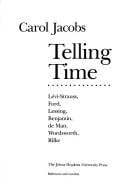
In poetic anthropology, fiction, or theoretical meditations on writing, Carol Jacobs contends, authors define their work in terms of a "lapse of time," both in consciousness and in conventions of representation. Texts often make reference to the past as their point of departure. But implicitly or explicitly there is a lunge into the future that radically reorders - or disorders - our concepts of writing. In this series of critical readings, Jacobs considers the ways in. Which time is the "condition of the telling" in works by Levi-Strauss, Ford Madox Ford, Lessing, Benjamin, de Man, Wordsworth, and Rilke. Despite the cultural and historical disparities among the texts, Jacobs argues, each is linked by a set of critical and theoretical issues concerning time and language. She examines how these writers situate their work in relation to the past, designating both their positions with respect to it and the implications of their pretensions. To write of it, and she considers how the endeavor of situating sometimes acquires particular names: apocalypse, in Levi-Strauss; impressionism, in Ford; allegorical commentary, in Lessing; pure language, in Benjamin; and that which is performed rather than named, in de Man, Wordsworth, and Rilke.
Page Count:
246
Publication Date:
1993-01-01
ISBN-10:
0801844770