Author Description
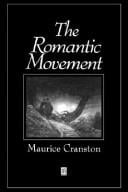
The Romantic Movement in Europe was both a revolt and a revival, a philosophy of life as well as of art. In the earliest expressions of romantic theory by Rousseau and Diderot, it is seen as a revolt against rationalism. In Great Britain and Italy it appears as a revolt against classicism, in Spain as a revival of the tradition of the Moorish courts, and in Germany, where it excited the greatest enthusiasm, as both a revolt against rationalism and a revival of the Gothic and Germanic. Despite the differences of aim and emphasis across Europe, Professor Cranston argues that romanticism was a European phenomenon, as universal as the Renaissance. He isolates its common features - liberty, introspection, and the importance of love; truth in the expression of feeling as much as of thought; nature seen as an object of devotion rather than scientific study; a tolerance of the grotesque coupled with an interest in the exotic, the primitive and the medieval; a concern for the value of intuition over ratiocination; and a preference for audacity over prudence. The Romantic Movement is part of the common European heritage, and its influence is by no means at an end. This book is the first to describe its philosophy, history, and cultural and artistic manifestations, and the ways these varied across the countries of Europe.
Page Count:
169
Publication Date:
1994-01-01
ISBN-10:
0631173994