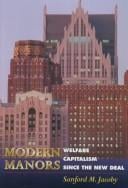
Author Description
In light of recent trends of corporate downsizing and debates over corporate responsibility, Sanford Jacoby offers a timely, comprehensive history of twentieth-century welfare capitalism - the history of nonunion corporations that looked after the economic security of employees. Building on three fascinating case studies of "modern manors" - Eastman Kodak, Sears, and TRW - Jacoby argues that welfare capitalism did not expire during the Depression, as traditionally thought. Rather, it adapted to the challenges of the 1930s and became a powerful, though overlooked, factor in the history of the welfare state, the labor movement, and the corporation. Although employer paternalism has faltered in recent years, many Americans still look to corporations, rather than to unions or government, to meet their needs. Jacoby explains why there remains widespread support for the notion that corporations should be the keystone of economic security in American society and offers a perspective on recent business trends.
Page Count:
345
Publication Date:
1997-01-01
ISBN-10:
0691015708
Community Tags
Reader Comments
Share Your Thoughts
No comments yet. Be the first to share your thoughts!