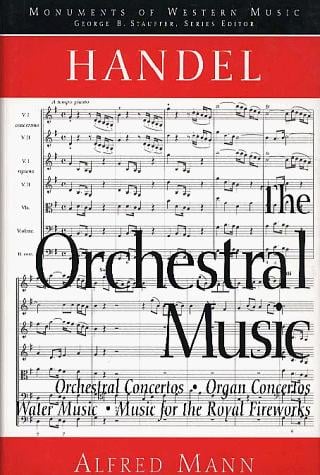
Handel, the orchestral music: orchestral concertos, organ concertos, Water music, Music for the royal fireworks
0
0
Author Description
Perhaps best known today for his masterworks in the oratorio form such as Messiah, George Frideric Handel was also an important and innovative composer of orchestral music. His concertos and suites hold a key position in the history of the orchestra as well as in the development of Handel's own compositional technique. In his well-known Water Music and Music for the Royal Fireworks suites, for example, Handel developed a special style designed to be effective in outdoor performance, taking full advantage of his gift for the creation of grand designs and luscious harmonies. His orchestral concertos display a remarkable transitional quality, as Handel adheres to the Baroque model provided by Corelli yet also incorporates elements of the rising symphonic style. And in his organ concertos, Handel established a novel genre, one that would be widely adopted by later English composers. The book begins with a chapter on the orchestra as it developed during Handel's time. The next six chapters are each devoted to analysis of a significant grouping of compositions: the early pieces, including the overtures to the first six Chandos Anthems; the Opus 3 orchestral concertos, assembled by Handel's publisher to capitalize on his success; the organ concertos; the twelve orchestral concertos of Opus 6, written in a single month; the final orchestral Concerti a due cori; and the Water Music and Music for the Royal Fireworks. Mann concludes with a general exploration of Handel's compositional process and a consideration of performance practice issues relevant to the orchestral works.
Page Count:
182
Publication Date:
1996-01-01
ISBN-10:
0028713826