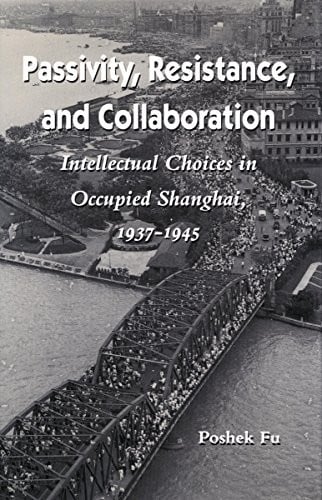
Passivity, resistance, and collaboration: intellectual choices in occupied Shanghai, 1937-1945
0
0
Author Description
"In contrast to the rich scholarship devoted to the human condition in Nazi-occupied Europe, especially Vichy France, few historians have delved deeply into the question of Chinese responses to the Japanese Occupation of 1937-45. Focusing on the intellectual life of Shanghai under occupation, this book attempts to correct the post-war perception of occupied China as a field of conflict between selfless resisters and shameless collaborators."--BOOK JACKET. "Instead, the author shows that wartime Shanghai exhibited a complexity and ambiguity of moral choices that defies such stereotyping. Ambiguous response was only natural in an extreme situation of dehumanizing terror, which Primo Levi aptly calls the "gray zone" of existence: a situation in which weakness, inconsistent behavior and compromises mingle with dignity and moral courage.^ The inner conflicts were especially acute among Chinese writers, who had a strong tradition of seeing themselves as moral spokesmen for their people."--BOOK JACKET. "The author argues that writers in occupied Shanghai exhibited a triad of responses to the Occupation - passivity, resistance, and collaboration. Many writers chose to live a reclusive life, seeing in passivity a symbolic voice of protest, a dignified means of survival that saved one's skin without sacrificing much of one's ideals. The few who resisted slighted personal concerns in favor of the heroic tradition of loyalism; in their minds, though not always through their actions, collective interests transcended the private realm. Literary collaborators, seeking to assuage their moral guilt, portrayed themselves as banal victims of an all-too-human instinct to survive."--BOOK JACKET.^ "These three modes of intellectual response are illustrated by the novelist and poet Wang Tongzhao, the playwright Li Jianwu, and a group of essayists associated with the collaborationist magazine Gujin. Together their Occupation experience forms the narrative structure of this work."--BOOK JACKET. "Contrary to the binary stereotype, none of these writers was consistently selfless or invariably shameless. Wang's passivity was an eloquent statement of patriotic protest, but beneath it lay a subtext of alienation and escapism. Li committed himself to fighting the enemy only when he was compelled to find employment in the theater, the most important forum for anti-Japanese expression. The Gujin essayists refused to glorify the occupying force, yet enjoyed the rewards and privileges that followed from their compromises. Thus, all these intellectuals typified, on human level, the "gray zone" of moral ambiguity involved in surviving the dark days of Occupation."--BOOK JACKET.
Page Count:
261
Publication Date:
1993-01-01
ISBN-10:
0804721726
Community Tags
Reader Comments
Share Your Thoughts
No comments yet. Be the first to share your thoughts!