Author Description
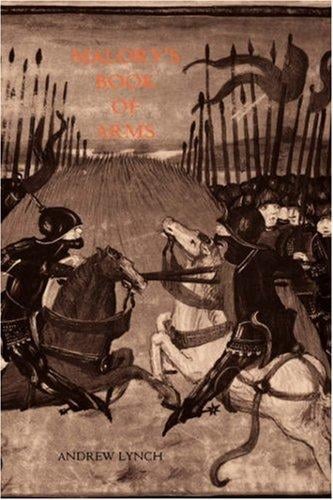
This study of Sir Thomas Malory's Le Morte Darthur centres on its main narrative interest, armed combat. The description of knightly combat, with its complex thematic affinities, is seen as Malory's chief expressive medium. In the analysis of the discourse of fighting, some repeated descriptive preoccupations - to do with name, vision, blood, emotion and gesture - are treated as 'needs of meaning' with relevance for the whole text, and related to political, religious, genealogical, sexual and medical views of Malory's period. The critical discussion thus rests more on these elements of discourse rather than on the broader concepts such as 'chivalry' or 'love' normally applied to Malory. The book begins with a wide-ranging study of the power of 'name' as public reputation in the Morte, challenging the normal reading of Malory's adventures as 'proof', 'chance' or moral symbolism. After a historical survey of Malory reception and of the attempts of earlier critics to moralise the fights in inappropriate terms, the core of the book is devoted to the narrative vision and thematics of combat, covering the whole text, but with special emphasis on the stories of knight-errantry. The often neglected Book of Sir Tristram, with its problematical revelation of collective and competitive impulses - good and ill will - within knightly fellowship, receives detailed attention. A final chapter examines the narrative representation of emotion and the 'inner life'. In considering these, along with aspects of speech, gesture and gender, an important role for personal feeling in Malory - the 'herte' - is outlined.
Page Count:
169
Publication Date:
1997-01-01
ISBN-10:
0859915115