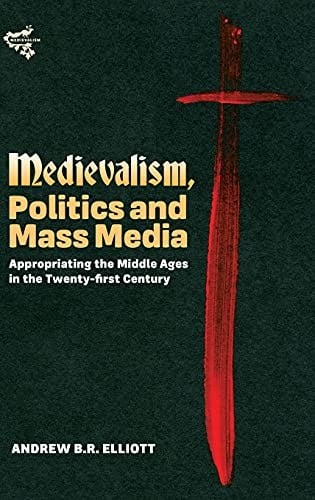
Medievalism, Politics and Mass Media: Appropriating the Middle Ages in the Twenty-First Century
0
0
Author Description
In 2001, George Bush provoked global uproar by describing the nascent War on Terror as a "Crusade". His comments, however, were welcomed by Al-Qaeda, who had long been describing Western powers in precisely the same terms, as modern Crusaders once again invading the Middle East. Ten years later in 2011, Anders Behring Breivik launched a tragic attack in Norway, killing 77 unarmed civilians, mostly teenagers. Breivik saw himself as a Templar Knight, a member of a group of knights allegedly resurrected in London in 2002 by one "Lionheart". Later investigations suggested that the blogger, Lionheart, might have had links to the right-wing, anti-Muslim, English Defence League and other so-called "counterjihad" blogging networks decrying an Islamic invasion of Europe. Though extreme examples, these cases all share a crucial detail: the framing of current political issues in terms of recognisable medieval precedents. In the widespread use of medievalism across social- and mass-media channels, it is clear that such political medievalisms are not intended as a specific reference to a historical precedent, but as a use of the past for modern concerns. The argument of this book is that we need new ways of analysing this kind of medievalism; extending far beyond the concept of anachronism or inaccuracy, references to Crusades, Templars and Vikings affect the way we understand our world.
Page Count:
235
Publication Date:
2017-01-01
ISBN-13:
9781843844631