Author Description
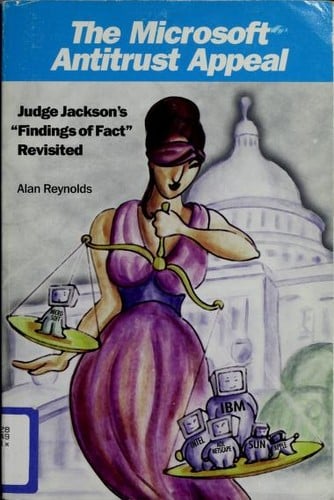
"A judge's legal ruling can be a complex interaction between facts and laws. However, if a judge bases his ruling on erroneous technological theories, speculation, and forecasts, the final decision will be a wasteland of legal mumbo-jumbo, incomprehensible to both lawyers and critics. This is what happened when Judge Thomas Penfield Jackson decided the Microsoft antirust case, ordering the division of the software giant into two separate companies.". "In a new study of the Microsoft antirust case, Hudson Institute economist Alan Reynolds examines, point for point, every Finding of Fact on which Judge Jackson based his conclusions. He critiques the accuracy, consistency, and relevance of nearly all of the judge's 412 Facts, finding that half of the facts went unmentioned in the judge's legal conclusions. This leads Reynolds to the verdict that the case is "literally baseless."". "The book also provides detailed reporting of key meetings and memos from Microsoft, Netscape, and many more top players involved in the trial or the computer software and hardware industries. Reynolds brings the reader deep into the world of legal questions surrounding computers and software, and gives deep insights into this increasingly important industry."--BOOK JACKET.
Page Count:
135
Publication Date:
2001-01-01
ISBN-10:
1558131302