Author Description
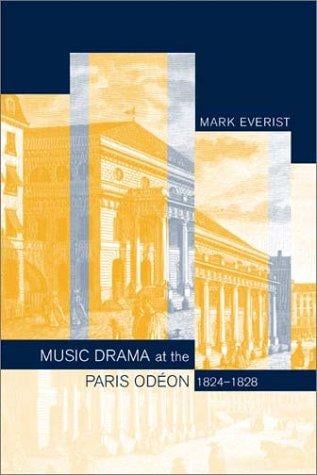
"During the nineteenth century, French culture was highly regimented. Traditionally home to spoken drama, the Theatre-Royal de l'Odeon began to produce operas after receiving a license from the French government. To protect the three other opera houses from competition - the Academie royale de musique, the Theatre italien, and the Theatre-Royal de l'Opera-Comique - the government restricted Odeon productions to opera comique that had fallen into the public domain and, most important, translations of German and Italian works. But rather than decreasing the Odeon's popularity, the exclusion of new French works from its repertoire encouraged to Odeon to showcase a great range of European musical theater and contributed to its success. Because lyric repertory at the Odeon was produced alongside the theater's traditional stock of comedy and tragedy, audiences could hear three works in each of three different genres during the same evening.". "Everist reconstructs the political power structures that controlled the world of Parisian music drama, the internal administration of the theater, and its relationship with composers and librettists, as well as with the city of Paris itself. His rich depiction of French cultural life and the artistic contexts that allowed the Odeon to flourish highlights the benefit of close and innovative examination of society's institutions."--BOOK JACKET.
Page Count:
408
Publication Date:
2002-11-04
ISBN-10:
0520234456
ISBN-13:
9780520234451