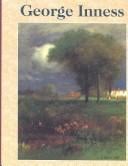
Author Description
George Inness (1825-1894) was a pivotal force in 19th-century landscape painting, first for his blending of Hudson River School and European styles and later for his poetic impressionism. Acclaimed during his lifetime, Inness' work fell victim to changing 20th-century taste, as did the French Barbizon School. Now both are becoming greatly valued again. "There's no better way to say it than Cikovsky's first sentence: "George Inness is one of the most neglected major American artists of the nineteenth century." As he surveys Inness' life and dramatically beautiful paintings, Cikovsky identifies various reasons for Inness' decline in critical fortune, from being considered the best landscape artist in America to being almost forgotten. Inness was largely self-taught and had little patience for the detail and labor of drawing and engraving. He loved, instead, the richness of paint and color, which he called the soul of painting, and believed that one painted, "not to imitate a fixed material condition, but to represent a living motion." Epileptic and prone to depression, Inness was inherently attuned to the beauty of shadows and stormy skies, as well as the mysterious, moody sweep of lush, stream-traced landscapes and autumn's golden light and sense of suspension and transition. Inness' atmospheric paintings are difficult to reproduce, but Abrams has done its usual fine job, enabling us to lose ourselves in Inness' extraordinarily lyrical world." Donna Seaman, Booklist review.
Page Count:
143
Publication Date:
1993-01-01
ISBN-10:
0810934620