Author Description
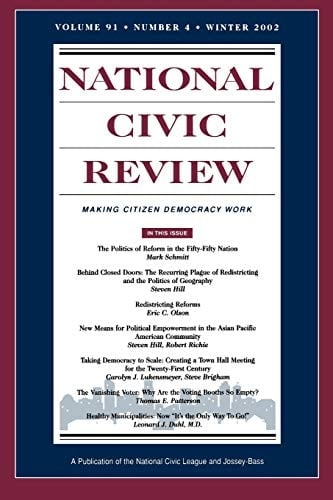
With lessons learned from the national elections of 2000 and 2002,this issue focuses on the specific challenges and opportunities inpolitical reform that lie ahead. Mark Schmitt, director of theProgram on Governance and Public Policy of the Open SocietyInstitute, argues that we are in the era of the fifty-fifty nation,with an electorate divided almost evenly between the two majorparties, and elections decided by marginal voters along thedividing lines. Political scholar Thomas E. Patterson analyzes thedownturn in voter turnout and proposed remedies to reverse thistrend. The Center for Voting and Democracy provide several articlesthat focus on the relationships among incumbency, redistricting,and electoral competitiveness in making a case for substantivevoting system reform. Carolyn J. Lukensmeyer and Steve Brigham,from AmericaSpeaks, note the difficulties in conducting town halldeliverations in the mdern age and detail the facilitated dialoguesthey conducted among nearly five thousand New Yorkers about thefuture of Ground Zero. Leonard J. Duhl, M.D., one of the foundersof the Healthy Cities/Healthy Communities movement, provides afitting close with the remarks on community first delivered at aceremony at the Pan American Health Organization, where he receivedthe Abraham Horvitz Award in recognition of his importantcontributions to improving health in the Americas. With scholarship and voices from the field, this issue willprovide inspiration and insight to the political reform communityat large as we collectively take up the continuing work ofimproving our democracy.
Page Count:
96
Publication Date:
2003-02-21
ISBN-10:
078796364X
ISBN-13:
9780787963644