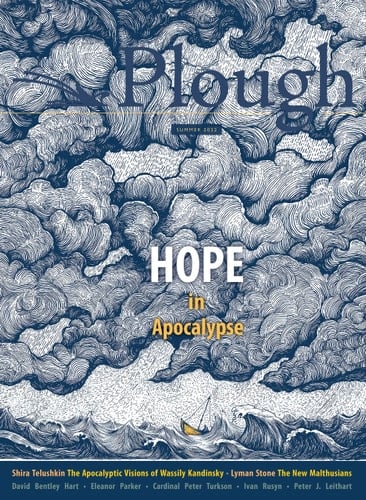
Plough Quarterly No. 32 - Hope in Apocalypse
0
0
Author Description
In times that feel apocalyptic, where do we place our hope? It's an apocalyptic moment. The grim effects of climate change have left many people in despair. Young people often cite climate fears as a reason they are not having children. Then there's the threat of nuclear war, again in the cards, which could make climate worries a moot point. The paradoxical answer ancient Judaism gave to such despair was a promise: the promise of doomsday, the "Day of the Lord" when God will visit his people and establish lasting justice and peace. Judgment, according to the Hebrew prophets, will be followed by renewal - for the faithful, and perhaps even for the entire cosmos. Over the centuries since, this hopeful vision of apocalypse has carried many others through moments of crisis and catastrophe. Might it do the same for us? On this theme: creation is transformed and made new. That's what the "end of the age" meant to Jesus and his early - Peter J. Leithart says when old worlds die, we need something sturdier than the myth of progress. - Brandon McGinley says you can't protect your kids from tragedy. - Cardinal Peter Turkson points to the spiritual roots of the climate crisis. - David Bentley Hart says disruption, not dogma, is Christianity's grounds for hope. - Hanna-Barbara Gerl-Falkovitz reminds us that the Book of Revelation ends well. - Lyman Stone argues that those who claim that having children threatens the environment are wrong. - Eleanor Parker recounts how, amid Viking terror, one Anglo-Saxon bishop held a kingdom together. - Shira Telushkin describes how artist Wassily Kandinsky forged a path from the material to the spiritual. - Anika T. Prather learned to let her children grieve during the pandemic. Also in the issue: - Ukrainian pastor Ivan Rusyn describes ministering in wartime Bucha
Page Count:
120
Publication Date:
2022-05-31
ISBN-10:
1636080553
ISBN-13:
9781636080550
Community Tags
Reader Comments
Share Your Thoughts
No comments yet. Be the first to share your thoughts!