Author Description
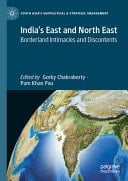
This book critically examines the complex processes of border-making in South Asia, with a focus on India’s Eastern and Northeastern borderlands. Rooted in the historical legacies of colonialism and their post-colonial implications, it explores how borders in this region embody rupture and hybridity, challenging simplistic notions of territoriality. Through diverse perspectives, the book delves into the nuanced interplay between state-making, political mobilization, and the lived experiences of borderland communities. The chapters investigate a range of borders—open, closed, land, and river—alongside the communities who navigate these spaces. By analyzing the social, legal, and political dimensions of these borderlands, the volume highlights the transcendence between legible and illegible, and legal and illegal, categories. It sheds light on the “cartographic anxieties” of states and the “demographic anxieties” of communities, emphasizing the tensions between imposed boundaries and lived realities.This interdisciplinary volume moves beyond viewing borderlands as mere physical divides, instead framing them as dynamic spaces shaped by histories, identities, and cross-border interactions. With contributions from scholars of varying expertise and positionalities, it offers a multifaceted understanding of border-making and its implications, challenging monolithic narratives and fostering a deeper appreciation of South Asia’s intricate borderland dynamics.
Page Count:
410
Publication Date:
2026-03-12
ISBN-10:
9819546516
ISBN-13:
9789819546510