Author Description
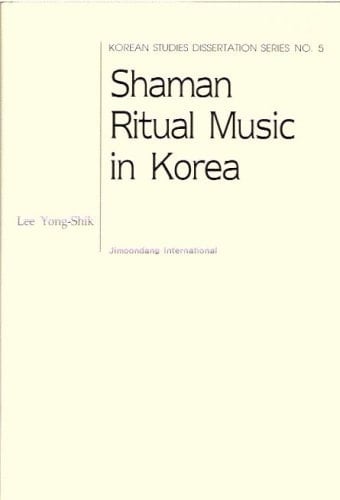
Although Korean shamanism was marginalized for many centuries due to the lack of theoretical explanation or written religious doctrine, it has transmitted cultural norms, the spiritual ethos, and the religious context of the Korean belief system and culture. Due to its religious purity as the "indigenous" religion of the people, Koreans have realized that shamanism is the principal key to interpreting Korea's traditional culture. The primary factor that attracts most contemporary Koreans to shamanism is the notion of a ritualization of harmony. Korean shaman ritual, or gut, aims to construct a collective harmony between human and nature, a social harmony between the human beings, a family harmony between the living and the dead and between the parents and the offspring, as well as an individual harmony capable of manifesting the Korean ethos of han and sinmyeong. Music functions to enhance both religiosity and entertainment in Korean gut. The harmony of these two traits during a gut illuminates its dual nature as a solemn ritual and as a merry festival. This ritualization of religious-musical harmonization, providing efficacy and entertainment while combining the sacred and the profane, ritual and theater, and nature and human, is unique in Korean shaman ritual music.
Page Count:
352
Publication Date:
2004-09-01
ISBN-10:
1931897107
ISBN-13:
9781931897105