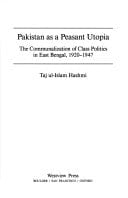
Pakistan As A Peasant Utopia: The Communalization Of Class Politics In East Bengal, 1920-1947
0
0
Author Description
Dr. Hashmi's study brings to light the important and often-ignored role of East Bengali peasants in the formation of Pakistan. The author shows how religion and ethnicity played more important roles than did class differences in this process. Because most zamindars, moneylenders, and professional elites in East Bengal were high-caste Hindus, and peasants and other working-class people were mostly Muslims, religion and ethnicity always had the potential to become more important than class differences. The British government, apprehensive of the Hindu nationalists, helped develop the Muslim and low-caste peasant cause to counteract Hindu nationalism. Similarly, Muslim elites and bourgeoisie supported the government's efforts because of their own conflicting interests with the Hindu nationalists. Ultimately, both the Muslim aristocracy and rich peasants collaborated in arousing a "false consciousness" between themselves and the poorer peasants, thus weakening the class struggle and paving the way for the peasants' support of a homeland for Indian Muslims.
Page Count:
309
Publication Date:
1992-03-09
ISBN-10:
0813378265
ISBN-13:
9780813378268