Author Description
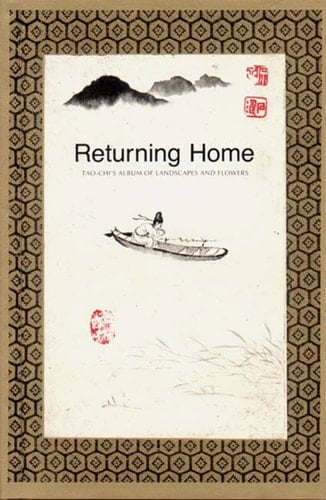
Tao-chi, the 17th century poet, painter and scholar, was born into a branch of the imperial family at the very close of the Ming Dynasty in China. When Tao-chi was three years old, his father attempted to seize the royal throne. The attempt having failed, the father was executed and Tao-chi was rescued by a member of the household who fled with him to a city in the north. With the fall of the Ming Dynasty and the conquest of China by the Manchus, the young Tao-chi and his servant-companion for the next four decades, Ho-t'ao, found refuge in the Buddhist priesthood, setting out together in the early 1650s to travel the countryside as mendicant monks. So began the itinerant life of an artist whose work is ranked today among the very great achievements of later Chinese painting, a life that exemplifies a distinctive and recurring phenomenon in Chinese cultural history-0-the precipitation by war and by social upheaval of vigorous resurgence in the arts. This book beautiful reproduces in facsimile an album of twenty-four small leaves executed by Tao-chi in 1695 at a time of great persona turmoil and uncertainty. Six landscape views alternate with six studies of flowers, each painting being accompanied by a page of poetic comment in which Tao-chi reflects metaphorically upon the loneliness and dangers of existence and the place of love and friendship in human life.
Page Count:
91
Publication Date:
1976-12-01
ISBN-10:
0807610402
ISBN-13:
9780807610404