Author Description
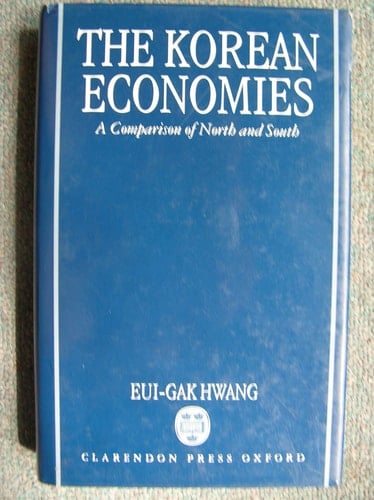
After the war, the divided Korea ignored common historical and economic homogeneity: the North established an autocratic socialism while the South established a market-oriented capitalism. Hwang analyzes Korea's traditional interdependence and the economic consequences of the war, giving a comparison of the two economies in terms of the macroeconomic index and living standards. He investigates public finance within the economies as well as external transactions and policies, revealing that the South's foreign dependency policy has recently proven much more effective than the North's self-sufficiency. Hwang also includes a discussion of the economic contacts between the North and the South since September 1991, when the two Koreas became regular members of the United Nations, arguing that this will serve to ignite a new era of mutual economic and political interaction.
Page Count:
368
Publication Date:
1994-04-07
ISBN-10:
0198288018
ISBN-13:
9780198288015
KOREA NORTH
Community Tags
Reader Comments
Share Your Thoughts
No comments yet. Be the first to share your thoughts!