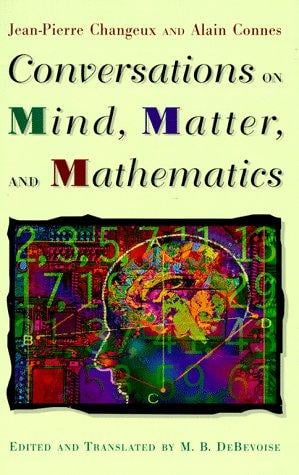
In a wide-ranging series of conversations Jean-Pierre Changeux and Alain Connes discuss the development of the human brain as a function of natural selection and variation, debate the character of human intelligence (and the obstacles that stand in the way of simulating, modeling, or actually reproducing it by mechanical means), dispute the reasons for the "unreasonable effectiveness" of mathematics in explaining the physical world, and differ over the sources of mathematical creativity. In an epilogue they go on to inquire into the relation of mathematics and science to ethics, asking whether a code of human morality consistent with what is known about the structure and function of the human brain can be devised, and whether the "enlargement of human sympathies" hoped for by Darwin, Kropotkin, and others may be given a natural basis. This vivid record of profound disagreement, and, at the same time, passionate search for mutual understanding, follows in the modern tradition of Poincare, Turing, Hadamard, and von Neumann in probing the limits of human rationality and intellectual possibility. Why order should exist in the world at all - and why it should be comprehensible by human beings - is the question that lies at the heart of these remarkable dialogues.
Page Count:
260
Publication Date:
1995-01-01
Philosophy
Psychology