Author Description
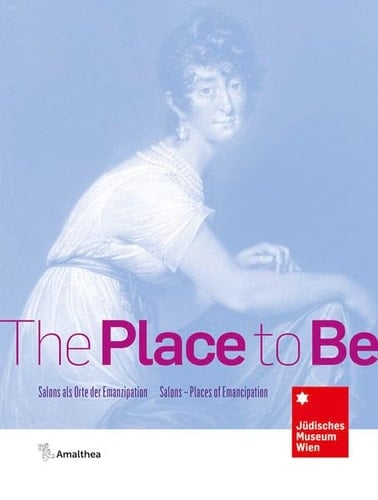
What Made The Vienna Salons The Places To Be Between 1780 And 1938 Would Be Described Today As Networking In The Best Sense. Mostly Shaped By Their Jewish Hostesses, These Communication Spaces Were Also Spaces Of Emancipation And Empowerment In Two Respects: For Women Who Were Still Excluded From Public Life, And For The Development Of A Critical, Middle-class Civic Society. The Exhibition Introduces The Salons Of Fanny Arnstein And Josephine Wertheimstein, Right Up To The Reform Salons Of Berta Zuckerkandl And Eugenie Schwarzwald, As Cultured Spaces Of Politics And Political Spaces Of Culture. It Makes The Accomplishments Of Salonnières For The Viennese Cultural, Economic And Political Scene Tangible. And It Ultimately Shows What Importance Viennese Salon Culture Gained For The Expelled Viennese Jewish Women And Men In Exile, And That Is Wasn't Coincidentally Hilde Spiel, Returning Home From English Exile, Who Made This Culture Salonfähig (socially Acceptable) Once Again In The Post-war Years In Vienna. Herausgegeben Von Werner Hanak, Astrid Peterle Und Danielle Spera Im Auftrag Des Jüdischen Museums Wien = Salons - Places Of Emancipation / Edited By Werner Hanak, Astrid Peterle, And Danielle Spera On Behalf Of The Jewish Museum Vienna. Catalogue Published To Accompany The Exhibition Of The Same Name At Jewish Museum Vienna, May 30, 2018 To October 14, 2018. Includes Bibliographical References. Parallel Text In German And English.
Page Count:
224
Publication Date:
2018-05-01
ISBN-10:
3990501259
ISBN-13:
9783990501252