Author Description
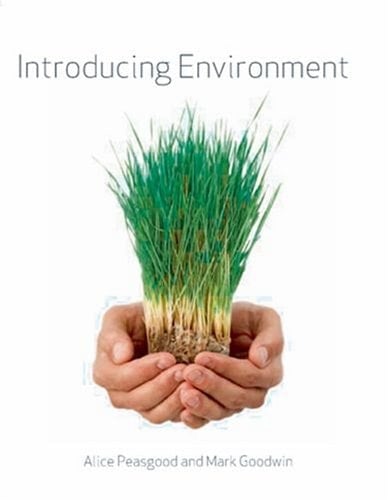
Product Description Our planet is a dynamic network of energy, organisms, and non-living material - generating biodiversity on a global scale. But how does this network operate? How do its key components interact, and how is it regulated? How is human activity affecting these interactions, and at what cost? Introducing Environment takes the reader on a guided tour of some of the major environmental issues of our time. Starting with the thin layer of life upon our planet - the biosphere - it explains ecological concepts such as species, food chain, ecosystem and biodiversity. From that biologicalbasis, it describes interrelationships between plants, animals and the wider environment with short case studies and examples. Then, the reader learns about the unique role of humans, showing the ways in which we have changed the environment to suit our needs, and using historical and contemporarycase studies to show the impact of human activities. The later chapters of the book move onto a more technological approach, looking at how we can tell what effect current lifestyles have upon the environment. Next, sustainability is introduced, to indicate a few of the major factors, with examples of successful schemes to reduce environmentalimpact. The book ends with the question 'what netxt?', giving the reader a chacne to consider the different zones of influence (personal, local, corporate, national and international) that are involved in the complexity of addressing environmental problems. Introducing Environment does not pretend to be an all-encompassing tome, but awakens interest and provokes thought to stimulate further debate and study. It is the ideal text for anyone new to environmental science and ecology looking to master the essentials in a quick, straightforward way. About the Author Alice Peasgood is a lecturer in the Open University's Centre for Widening Participation. A physics graduate, she has spent 12 years at the University writing introductory courses in mathematics, science and technology, specifically for adults with little previous educational experience. She is thedeveloper and Chair of the presentation team for the Breakthrough to MST courses, which have recruited over 7000 students over their inception in the year 2000. Before joining The Open University, she was a lecturer in the Department of Applied Physics at Leicester Polytechnic (now DeMontfortUniversity) for seven years, teaching Environmental Science, amongst other subjects. Dr Mark Goodwin has spent fifteen years developing, writing and editing teaching materials for The Open University. He has edited The Sciences Good Study Guide and a number of courses on science, technology, politics and economics. He has worked as an author on the Open University coursesUnderstanding Health, Studying Mammals and Science and the Public. Before joining the University he worked as a Science Publications/Publicity Specialist for the UK Government's Overseas Development Natural Resources Institute.
Page Count:
192
Publication Date:
2007-04-13
ISBN-10:
0199217130
ISBN-13:
9780199217137
Community Tags
Reader Comments
Share Your Thoughts
No comments yet. Be the first to share your thoughts!