Author Description
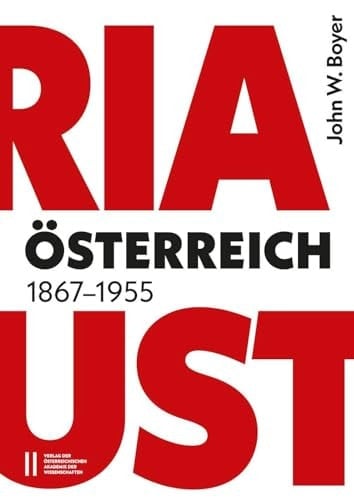
Austria, 1867-1955 connects the political history of German-speaking provinces of the Habsburg Empire before 1914 (Vienna and the Alpine Lands) with the history of the Austrian Republic that emerged in 1918. The book presents the case of modern Austria as a fascinating example of democratic nation-building. The construction of an Austrian political nation began in 1867 under Habsburg Imperial auspices, with the German-speaking bourgeois Liberals defining the concept of a political people ("Volk") and giving that "Volk" a constitution and a liberal parliamentary order to protect their rights against the Crown. The decades that followed saw the institutions of the Liberal state solidified, but in the 1880s and 1890s the membership of the "Volk" exploded to include new social strata from the lower bourgeoisie and the working classes, exemplified by the founding of the two great ideological parties, Christian Socialism and Social Democracy, in the 1890s. The war of 1914/1918 exploded the Empire, with the Crown self-destructing in the face of military defeat, domestic unrest, and national partisanship. But this crisis also accelerated the emergence of democratic self-governance in the German-speaking Austrian lands, enshrined in the republican Constitution of 1920. The project of democratic nation-building failed in the 1920s and 1930s, culminating in the 1938 Nazi occupation. After 1945 the surviving legatees of the Revolution of 1918 reassembled under the four-power Allied occupation, fashioning a jointly controlled political system which buffered intense ideological partisanship.The result, by the 1960s, was a well-functioning republican political culture in which Catholics and Socialists had embraced the need to share the governance of the state.
Page Count:
1205
Publication Date:
2025-10-21
ISBN-10:
3700196008
ISBN-13:
9783700196006