Author Description
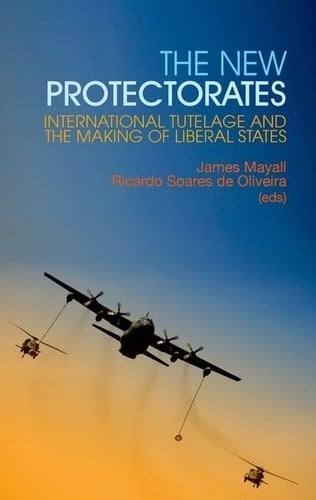
Product Description German troops fighting the Taliban in the Hindu Kush; EU judges sitting in courts in the Balkans; UN viceroys governing parts of Oceania; American occupation of the Middle East. Amid the myriad political experiences of the post-Cold War era, the historians of the future are likely to payparticular attention to attempts by outsiders to administer a host of post-conflict societies, to perform physical and social reconstruction, to establish functioning institutions, to open economies and, ultimately, to transform the "maladjusted" political cultures of Africa, Asia and the MiddleEast. Few developments in the two decades after 1989 were as revealing of the character of the international system, of the gaps between liberal discourse and practice, and of the fleeting nature of the Western hegemonic moment.What made the new protectorates possible? What were they like as an actual political experience? How contradictory was their reception? Why was the process of governing others for their own good so flawed and why were the outcomes so disappointing? These are among the questions addressed by some ofthe leading authorities in the field, including Stefan Halper, Christopher Clapham, Mats Berdal and Richard Caplan. Review "The editors turn a critical eye on the role of external actors in post-war societies. [...] Both optimistic and skeptical readers will find evidence to suit their arguments in this important volume; but the balance of evidence will better suit the pessimists. Practitioners would do well to read itclosely."--Bruce Jones, Director and Senior Fellow of the Center on International Cooperation, NYU and Senior Fellow and Director of the Managing Global Insecurity Program at the Brookings Institution"This is a valuable, timely and authoritative examination of the causes and failures of western-led humanitarian interventionism in the post-Cold War period. The authors conclude that if nation-building on the lines of a liberal state, politically free and economically open, was impossible inBosnia and Kosovo in Europe, it was even more unlikely to be viable, let alone to be perceived as legitimate, in Iraq, Afghanistan or Libya."--Krishnan Srinivasan, former Foreign Secretary, Government of India and Deputy Secretary General of the Commonwealth"This is a fascinating and insightful collection of essays from a distinguished set of authors. It examines the international trusteeship of troubled territories from a wide and complimentary set of angles: historical and contemporary, tactical and strategic, theoretical and practical."--Iain King,co-author,Peace at any Price: How the World Failed Kosovo"The book starts off with a superb introduction by the editors, offering a clear and insightful perspective on the motivations for the enterprise of international governance and liberal statebuilding and the gaps between discourse and practice...[It] then proceeds in two main parts, outliningfirstly the historical context and reception of the new protectorates (chapters one to seven) and subsequently their governance (chapters eight to fourteen). The chapters are crisp and refreshing in style, while providing excellent and succinct summaries. Each of them is a real addition to theliterature...an essential read for students, academics and policy-makers engaged in international security, and ought to be on any such reading list."--International Affairs About the Author James Mayall, FBA, is Emeritus Sir Patrick Sheehy Professor of International Relations, and Fellow of Sidney Sussex College, Cambridge University.Ricardo Soares de Oliveira is University Lecturer in Comparative Politics, University of Oxford, fellow of St Peter´s College, Oxford, and fellow of the Global Public Policy Institute, Berlin. He is the author ofOil and Politics in the Gulf of Guinea and co-editor ofChina Returns to Africa.
Page Count:
320
Publication Date:
2011-08-02
ISBN-10:
0199327505
ISBN-13:
9780199327508
Politics & Social Sciences
World politics
New Used & Rental Textbooks
Community Tags
Reader Comments
Share Your Thoughts
No comments yet. Be the first to share your thoughts!