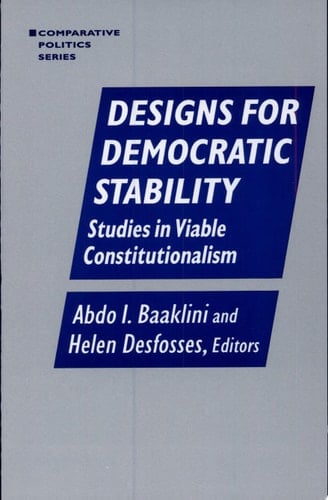
Designs for Democratic Stability Studies in Viable Constitutionalism
0
0
Author Description
Since the late 1980s and the collapse of communist, military, and race-based regimes across the world, the euphoria over democracy's triumph has given way to the practical question of how to enhance the viability of democratic constitutional government.<p>That is the subject of this book, with particular attention to the following questions: <br>-- What are the strengths and weaknesses of the available models of democratic governance and how adaptable are they to other societies? (Joel Aberbach; Bert Rockman; Gregory S. Mahler); <br>-- What are the most effective mechanisms for ensuring the accountability of public officials? (Fred W. Riggs; James L. Sundquist); <br>-- How does legislative structure enhance or diminish the prospects for democratic stabilization? (Abdo I. Baaklini); <br>-- What can transitional societies learn from the experience of India, Turkey, and Russia? (T.V. Sathyamurthy; Ersin Kalaycioglu; Erik P. Hoffmann); <br>-- How does the need for economic adjustment impact democractic consolidation? (Diane Ethier); <br>-- How has globalization complicated the task of democratic state-building? (Philp G. Cerny).
Page Count:
337
Publication Date:
1997-01-01
ISBN-10:
0765600528
ISBN-13:
9780765600523