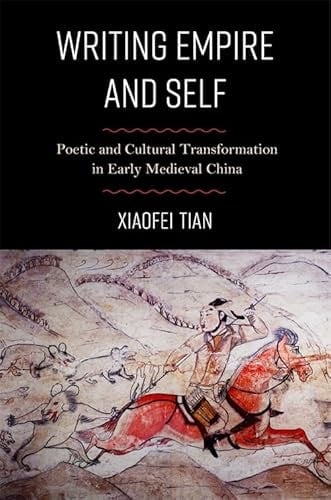
Writing Empire and Self - Poetic Revolution and Cultural Transformation in Early Medieval China
0
0
Author Description
<p>China's early medieval period, from the fifth through the early seventh century, from the Northern and Southern Dynasties through the unified Sui, was a time of political fragmentation, military strife, and ethnic conflict. It also witnessed brilliant artistic creations as well as a full flowering of court culture, with poetry at its heart. How did poetry come to be regarded as the most potent form of cultural capital, a privileged literary genre, and a foundational skill for members of the elite? How was poetry transformed from an instrument of empire building to a venue for articulating personal trauma and voicing critique of the state? <p>Tracing the evolution of poetry's role in Chinese society, <i>Writing Empire and Self</i> uncovers the profound cultural changes that took place in the early medieval era. Xiaofei Tian argues that in this period, a social community, eventually known as the "scholar elite" and treated as if it had always been a permanent fixture of the Chinese social order, came into being. She investigates the formation of this community, which left its mark on all later Chinese arts and letters, through a careful account of its history and textual production. Combining meticulous readings of numerous previously untranslated texts with a long-term, large-scale view of social and cultural history, <i>Writing Empire and Self</i> offers a fresh perspective on poetry's intricate relationship with the state.</p>
Page Count:
368
Publication Date:
2026-01-01
ISBN-10:
0231223145
ISBN-13:
9780231223140