Author Description
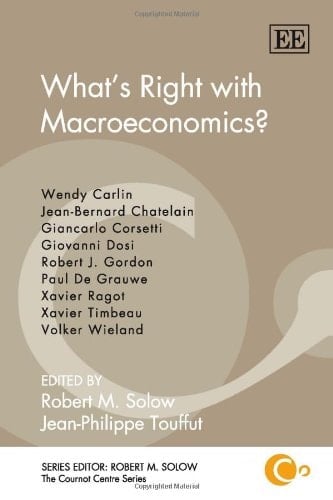
Global crises are very rare events. After the Great Depression and the Great Stagflation, new macroeconomic paradigms associated with a new policy regime emerged. This book addresses how some macroeconomic ideas have failed, and examines which theories researchers should preserve and develop. It questions how the field of economics - still reeling from the global financial crisis initiated in the summer of 2007 - will respond. <p>The contributors, nine highly-renowned macroeconomists, highlight the virtues of eclectic macroeconomics over an authoritarian normative approach, and illustrate that macroeconomic reasoning can still be a useful tool for carrying out practical policy analysis. As for emerging research programmes, their wide-ranging chapters remind us that there are positive approaches to and reasons to believe in old-fashioned macroeconomics.</p> <p>This challenging and thought-provoking book will prove a stimulating read for researchers, academics and students of economics, as well as for professional economists.</p> <p><b>Contributors include</b>: W. Carlin, J.-B. Chatelain, G. Corsetti, P. De Grauwe, G. Dosi, G. Fagiolo,<br> R.J. Gordon, M. Napoletano, X. Ragot, A. Roventini, R.M. Solow, X. Timbeau, J.-P. Touffut, V. Wieland</p>
Page Count:
240
Publication Date:
2012-01-01
ISBN-10:
178100739X
ISBN-13:
9781781007396