Author Description
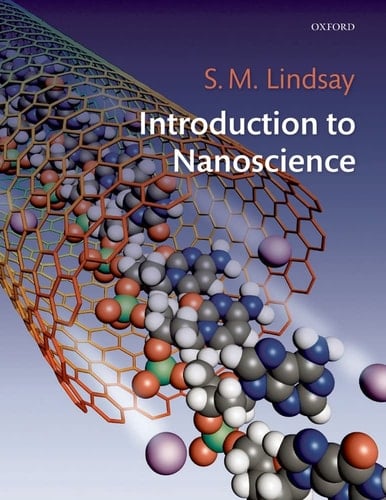
Product Description Nanoscience is not just physics, chemistry, engineering, or biology, but rather an integration of all of these disciplines. The first comprehensive and interdisciplinary text of its kind, Introduction to Nanoscience is an ideal handbook for advanced undergraduates and beginning graduatestudents in physics, chemistry, electrical engineering, materials engineering, chemical engineering, bioengineering, and biology. Written from the ground up for a diverse audience, the book is divided into three parts. Part I (The Basics) offers a self-contained introduction to quantum mechanics, statistical mechanics, and chemical kinetics that requires no more than a basic background in college calculus. The author'sconceptual approach and an array of examples and conceptual exercises will enable even those students with limited mathematical knowledge to grasp the majority of the essential material. Part II (Tools) covers microscopy, single molecule manipulation and measurement, nanofabrication, andself-assembly. Part III (Applications) covers electrons in nanostructures, molecular electronics, nano-materials and nanobiology. Each chapter starts with a survey of the required basics and ends by making contact with current research literature. Introduction to Nanoscience is also the first text to incorporate the often-neglected topic of complexity in nanosystems, dealing explicity with emergent phenomena from chemistry to biology. Examples include Kramer's theory of reactions (Chapter 3), the Marcus theory of electron transfer (Chapter8), and enzyme catalysis, molecular motors, and fluctuations in gene expression and splicing, all covered in Chapter 9. In addition, the book includes Richard Feynman's visionary essay, "There's Plenty of Room at the Bottom," which describes the consequences of smallness and quantum behavior. Review "The book covers a lot of ground and combines a thoroughness of treatment with a lightness of touch. It is attractive for both undergraduate students seeking clear explanations and graduate students wanting depth." ―Stephen Blundell, Oxford University About the Author Stuart Martin Lindsay Nadine and Edward Carson Professor of Physics and Chemistry Biodesign Institute Arizona State University Career Highlights: Assistant Professor, Physics, Arizona State University, 1979 Co-Founder Molecular Imaging Corporation, 1993 (now part of Agilent Technologies) Edward and Nadine Carson Presidential Chair in Physics, 2002 - Professor of Chemistry, 2003 - Consultant, Agilent Technologies, 2005 - Administrative positions Director Center for Singe Molecule Biophysics ($1M state budget, $3M external funding) Vice President, R&D, Molecular Imaging Corporation, 1994-2000 Interim Director, Center for Solid State Physics, 1991-1992 Associate Chair, Department of Physics, 1985 - 1989 Honors and awards: Fellow of the American Association for the Advancement of Science, 2003. Fellow of the American Physical Society, 1990. R&D 100 Award, 2004 Arizona Innovator of the Year (shared) 1999. Humbolt Senior Scientist Research Award (1993). ASU Awards: Outstanding Graduate Mentor (1990), Faculty Distinguished Achievement Award (2007)
Page Count:
457
Publication Date:
2009-01-01
ISBN-10:
0199544204
ISBN-13:
9780199544202
Nanoscience
Community Tags
Reader Comments
Share Your Thoughts
No comments yet. Be the first to share your thoughts!