Author Description
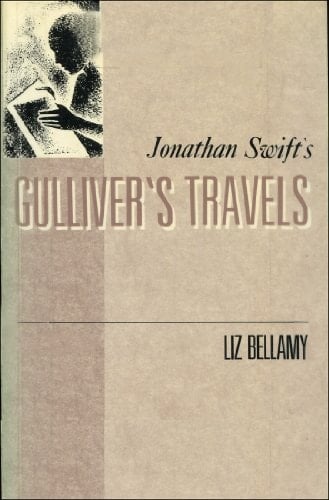
This textbook series focuses on some of the 'classics' of English Literature offering new and challenging ways of reading them by drawing on recent developments in modern literary theory. Each volume in the series offers a survey of the contemporary critical approaches which can be usefully brought to bear on a single text, in sections covering Historical and Cultural Context, Critical Reception, and Theoretical Perspectives. These sections are followed by an original, long discussion which develops a close reading of the novel or long poem in question, and an annotated guide to further reading. The books in this series will be genuinely accessible to undergraduate students at all levels. ------This study of Gulliver's Travels emphasises the political significance of the text and explores the connection between Swift's narrative structure and his political philosophy. Focusing on the function of irony in the text it sheds light on both the novel's satire and its ideological themes, such as the attacks on corruption, imperialism and colonialism. Liz Bellamy argues that the relationship between the narrator and the reader in the novel is used by Swift to symbolise the relationship between the ruler and the ruled within the polity. But, beneath Swift's satiric portrayal of the British political system lies his ambiguous attitude to his native Ireland. As a member of the Anglo-Irish elite, Swift was neither English nor Irish and, like Gulliver, he always felt himself an observer in a foreign land. This approach to Gulliver's Travels stresses Swift's uncertainty about the nature of national identity and ideas of the primitive and the civilised. Liz Bellamy is a Course Tutor for the Open University. Printed in Great Britain
Page Count:
133
Publication Date:
1992-01-01
ISBN-10:
0312085982
ISBN-13:
9780312085988