Author Description
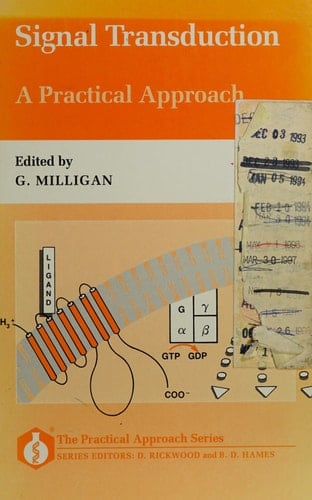
Cellular trans-membrane signalling mechnisms are amongst the most highly studied processes in the biological sciences. G-proteins provide transduction components to allow communication between receptors for hormones and neurotransmitters and their effector systems which include enzymes involved in the generation of intracellular secondary messengers and a variety of ion channels. Signal Transduction: A Practical Approach details the experimental approaches which are used to define the contacts between receptors and G-proteins and between these G-proteins and their effector systems. While much emphasis in the cellular signalling field remains on the measurement of adenylyl cyclase and of phosphoinositidase C activities, it is now clear that activation of G-protein linked receptors can also cause the regulation of phospholipases of the D and A2 classes. Thus, assays used to measure the activities of these enzyme systems are detailed in this book. The use of mutagenesis to define functional domains of G-proteins themselves has undergone considerable progress recently and examples of this approach are also provided. This volume will provide a useful guide to the newcomer to the subject, as well as allowing workers already in the field to expand the range of approaches in use in their laboratories.
Page Count:
208
Publication Date:
1992-09-24
ISBN-10:
0199632960
ISBN-13:
9780199632961
CELLULAR SIGNAL TRANSDUCTION