Author Description
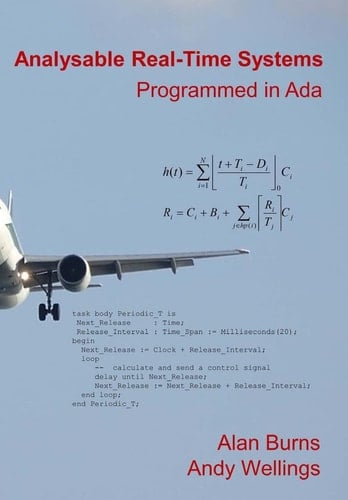
How do real-time systems differ from normal information processing systems? <p>How can real-time systems be analysed to ensure they satisfy their temporal constraints?</p> <p>Which features are needed in programming languages to implement real-time systems?</p> <p>This latest book from Burns and Wellings answers these and other key questions about real-time systems. It provides an in-depth analysis of the requirements for designing and implementing real-time, embedded, cyber-physical systems, and discusses how these requirements are supported by the Ada programming language. No other book on real-time (or concurrent) programming covers the same breadth of material.</p> <p>Topics covered in this book include:</p> <ul> <li>The definition of real-time, its necessary characteristics and desirable properties.</li> <li>Scheduling schemes, including fixed priority scheduling, Earliest Deadline First and Value-based scheduling.</li> <li>Analysis methods, including response-time analysis and processor demand analysis.</li> <li>Introduction to the Ada programming language.</li> <li>Programming adaptive and predictable real-time systems in Ada.</li> <li>Programming reliable and fault-tolerant systems in Ada.</li> <li>Analysing and programming for multiprocessor and multicore platforms.</li> <li>Mixed-criticality systems</li> </ul> The book is aimed at Final Year and Masters students in Computer Science and related disciplines. It has also been written with the professional software engineer, and real-time systems engineer, in mind. The material presented reflects the content of courses developed over a number of years by the authors at the University of York.
Page Count:
530
Publication Date:
2016-10-21
ISBN-10:
1530265509
ISBN-13:
9781530265503