Author Description
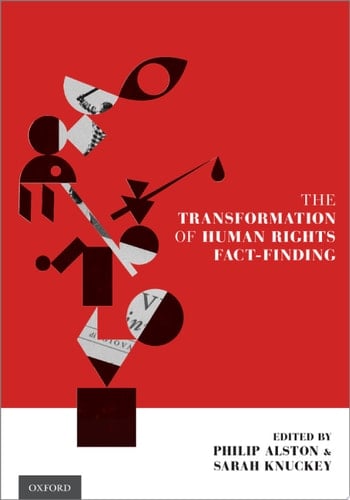
Fact-finding Is At The Heart Of Human Rights Advocacy, And Is Often At The Center Of International Controversies About Alleged Government Abuses. In Recent Years, Human Rights Fact-finding Has Greatly Proliferated And Become More Sophisticated And Complex, While Also Being Subjected To Stronger Scrutiny From Governments. Nevertheless, Despite The Prominence Of Fact-finding, It Remains Strikingly Under-studied And Under-theorized. Too Little Has Been Done To Bring Forth The Assumptions, Methodologies, And Techniques Of This Rapidly Developing Field, Or To Open Human Rights Fact-finding To Critical And Constructive Scrutiny. The Transformation Of Human Rights Fact-finding Offers A Multidisciplinary Approach To The Study Of Fact-finding With Rigorous And Critical Analysis Of The Field Of Practice, While Providing A Range Of Accounts Of What Actually Happens. It Deepens The Study And Practice Of Human Rights Investigations, And Fosters Fact-finding As A Discretely Studied Topic, While Mapping Crucial Transformations In The Field. The Contributions To This Book Are The Result Of A Major International Conference Organized By New York University Law School's Center For Human Rights And Global Justice. Engaging The Expertise And Experience Of The Editors And Contributing Authors, It Offers A Broad Approach Encompassing Contemporary Issues And Analysis Across The Human Rights Spectrum In Law, International Relations, And Critical Theory. This Book Addresses The Major Areas Of Human Rights Fact-finding Such As Victim And Witness Issues; Fact-finding For Advocacy, Enforcement, And Litigation; The Role Of Interdisciplinary Expertise And Methodologies; Crowd Sourcing, Social Media, And Big Data; And International Guidelines For Fact-finding.
Page Count:
448
Publication Date:
2015-01-01
ISBN-10:
0190239506
ISBN-13:
9780190239503