Author Description
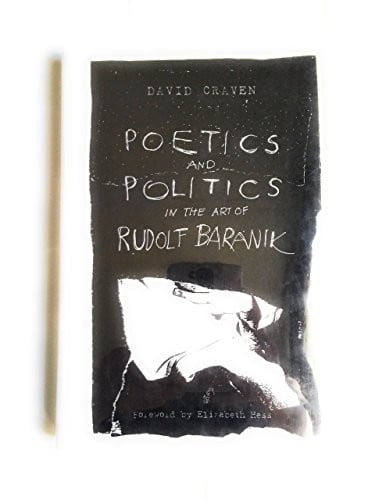
Rudolf Baranik has been a leader of virtually every progressive political movement within the New York art world from the 1960s to the mid-1990s, from the Artists and Writers Protest Group - which was one of the first organizations of intellectuals in the U.S. to speak up against the Vietnam War - to Artists Meeting for Cultural Change in the 1970s (the aim of which, to quote Baranik, was "to affect society, or at least analyze the artist's role in society") and Artists' Call Against U.S. Involvement in Central America, the 1980s group that so prominently supported Latin American self-determination during the Reagan and Bush administrations. In this first book-length study of Baranik's now-legendary artwork, author David Craven shows how Baranik's use of "socialist formalism" since the 1950s forces us to reconsider the standard accounts of U.S. postwar art. In paintings such as those that make up the Napalm Elegy series (1967-1974), Baranik used a language at once evocatively poetic and provocatively critical. His paintings have increasingly come to be considered among the most significant works of the New York School painting of the 1960s and 1970s, exemplifying what Theodor Adorno called "committed art." The second half of the book is an anthology of Baranik's aphoristic essays on art and politics, which appeared in various art world publications over the last four decades and have been written in conjunction with political involvements that led Lucy Lippard to call Baranik "an activist par excellence."
Page Count:
211
Publication Date:
1997-01-01
ISBN-10:
0391039881
ISBN-13:
9780391039889
Art