Author Description
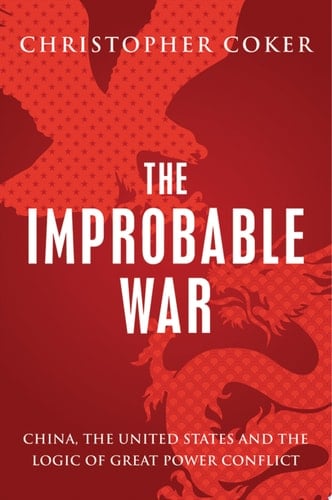
The Improbable War explains why conflict between the USA and China cannot be ruled out. In 1914 war between the Great Powers was considered unlikely, yet it happened. We learn only from history, and popular though the First World War analogy is, the lessons we draw from its outbreak are usually mistaken. Among these errors is the tendency to over-estimate human rationality. All major conflicts of the past 300 years have been about the norms and rules of the international system. In China and the US the world confronts two 'exceptional' powers whose values differ markedly, with China bidding to challenge the current order. The 'Thucydidean Trap' - when a conservative status quo power confronts a rising new one - may also play its part in precipitating hostilities. To avoid stumbling into an avoidable war both Beijing and Washington need a coherent strategy, which neither of them has. History also reveals that war evolves continually. The next global conflict is likely to be played out in cyberspace and outer space and like all previous wars it will have devastating consequences. Such a war between the United States and China may seem improbable, but it is all too possible, which is why we need to discuss it now.
Menrva's Summary
THE THESIS
This book investigates the conditions under which a conflict between the United States and China could occur, challenging the assumption that such a war is impossible. Christopher Coker, a professor of international relations, utilizes historical analysis of the last 300 years to argue that major conflicts are driven by competing norms and systemic rules rather than simple rational calculations. He posits that the lack of coherent strategy in both Beijing and Washington increases the risk of a conflict that could manifest in unconventional domains like cyberspace and outer space.
THE SCOPE MAP
What You Will Find
- Historical analysis of the First World War and its relevance to modern power dynamics
- Examination of the Thucydidean Trap as a framework for current US-China relations
- Discussion on the evolution of warfare in the 21st century
Scope Limits
- Does not provide a definitive prediction of future events
- Does not offer a comprehensive policy manual for diplomatic resolution
THE AUTHORITY PERSPECTIVE
Experts recognize this work as a critical contribution to the study of great power competition, noting its focus on the irrationality of historical conflict. Readers frequently highlight the author's ability to synthesize complex geopolitical theories into a clear, cautionary analysis of contemporary international relations.
Page Count:
225
Publication Date:
2014-01-01
ISBN-10:
0190257598
ISBN-13:
9780190257590
History
China
United States
Geopolitics
International relations
History Military
Military History