Author Description
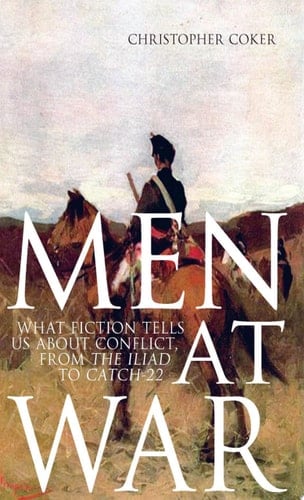
Since Achilles first stormed into our imagination, literature has introduced its readers to truly unforgettable martial characters. In Men at War, Christopher Coker discusses some of the most famous of these fictional creations and their impact on our understanding of war and masculinity. Grouped into five archetypes-warriors, heroes, villains, survivors and victims-these characters range across 3000 years of history, through epic poems, the modern novel and one of the twentieth century's most famous film scripts.Great authors like Homer and Tolstoy show us aspects of reality invisible except through a literary lens, while fictional characters such as Achilles and Falstaff, Robert Jordan and Jack Aubrey, are not just larger than life; they are life's largeness-and this is why we seek them out. Although the Greeks knew that the lovers, wives and mothers of soldiers are the chief victims of battle, for the combatants, war is a masculine pursuit. Each of Coker's chapters explores what fiction tells us about war's appeal to young men and the way it makes- and breaks-them. The existential appeal of war too is perhaps best conveyed in fictional accounts, and these too are scrutinized by the author.
Menrva's Summary
THE THESIS
This book investigates how fictional representations of combatants across three millennia shape our cultural understanding of war and the construction of masculine identity. Christopher Coker, a professor of international relations, utilizes a vast array of literary and cinematic sources to argue that fiction provides unique insights into the existential and psychological realities of conflict that historical records often overlook. By categorizing these characters into distinct archetypes, the author examines the enduring appeal of war and its transformative impact on the individual.
THE SCOPE MAP
What You Will Find
- Analysis of five primary character archetypes: warriors, heroes, villains, survivors, and victims.
- A chronological survey spanning from Homer's Iliad to twentieth-century literature and film.
- Examination of the intersection between martial duty, existential philosophy, and gender roles.
Scope Limits
- The analysis focuses primarily on the masculine experience of war rather than a comprehensive history of military tactics or geopolitical strategy.
THE AUTHORITY PERSPECTIVE
Scholars and readers frequently note the interdisciplinary nature of the text, which bridges the gap between literary analysis and political science. Experts highlight this as a useful framework for understanding how cultural narratives influence the perception of military service and the psychological toll of combat.
Page Count:
336
Publication Date:
2014-01-01
ISBN-10:
0190257482
ISBN-13:
9780190257484
Philosophy
History
English
War
Military History
English & College Success
Masculinity
Mens Studies
Literary Criticism