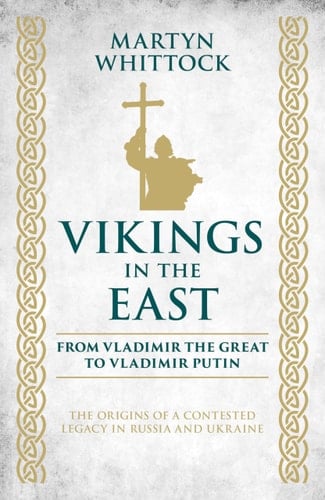
Author Description
<p>We commonly consider the Viking Age to be a western<br>European phenomenon. This is not surprising, given the Viking impact on<br>communities either side of the North Sea and the English Channel and across the<br>British Isles. However, it also had a crucial eastern aspect that was a key<br>cause of the Viking raids in the first place.</p><p>Changes taking<br>place in the distant Islamic Caliphate disrupted the flow of silver to<br>Scandinavia. For years, Islamic merchants and their middlemen had carried<br>silver to northern Europe. There, they traded it for slaves, furs and amber.<br>Facing this change, raiding in the West offered the Vikings an alternative way<br>to get their hands on precious metals and slaves.</p><p>At the same<br>time, the forest products of the eastern Baltic and the supply of slaves from<br>there drew Swedish adventurers eastward. For several reasons, the Viking<br>phenomenon increasingly had an eastern front. Utilizing the river systems, <br>these Vikings soon became active on the Black Sea, the Caspian Sea and in the<br>Byzantine Empire.</p><p>In this brilliantly timely book, historian<br>Martyn Whittock explains how it was a Viking-Slav dynasty that created the<br>first Russian state and how a rivalry between Viking leaders set up the states<br>that would later become Russia and Ukraine, with consequences we are still<br>living with today.</p><p>Since the sixteenth century, rulers in<br>Russia have referenced these origins to enhance their power and secure control<br>over the Ukrainian lands, most recently demonstrated by Vladimir Putin as his<br>justification for the seizure of Crimea and then the Russian invasion of<br>Ukraine.</p></p>
Page Count:
320
Publication Date:
2025-01-01
ISBN-10:
1785909053
ISBN-13:
9781785909054